For the 3rd Barry Dwolatzky Memorial Lecture at University of the Witwatersrand. Read in 20 mins or watch the video.
Abstact: Trust is not what we add to a technology once it works. Trust is the technology. Through two possible versions of Johannesburg in 2046, this lecture argues that the bottleneck of the coming decade will not be capability but credibility — and proposes the institutions this continent has yet to build: to check what we are given, measure what we adopt, and make what nobody will make for us.
Machines, Michael Donaghy
Dearest, note how these two are alike:
This harpsichordpavaneby Purcell
And the racer’s twelve-speed bike.
The machinery of grace is always simple.
This chrome trapezoid, one wheel connected
To another of concentric gears,
Which Ptolemy dreamt of and Schwinn perfected,
Is gone. The cyclist, not the cycle, steers.
And in the playing, Purcell’s chords are played away.
So this talk, or touch if I were there,
Should work its effortless gadgetry of love,
Like Dante’s heaven, and melt into the air.
If it doesn’t, of course, I’ve fallen. So much is chance,
So much agility, desire, and feverish care,
As bicyclists and harpsichordists prove
Who only by moving can balance,
Only by balancing move.
Letter to Barry
Good evening everyone. That poem by Michael Donaghy is a letter, from someone who isn't here, to the people who are.
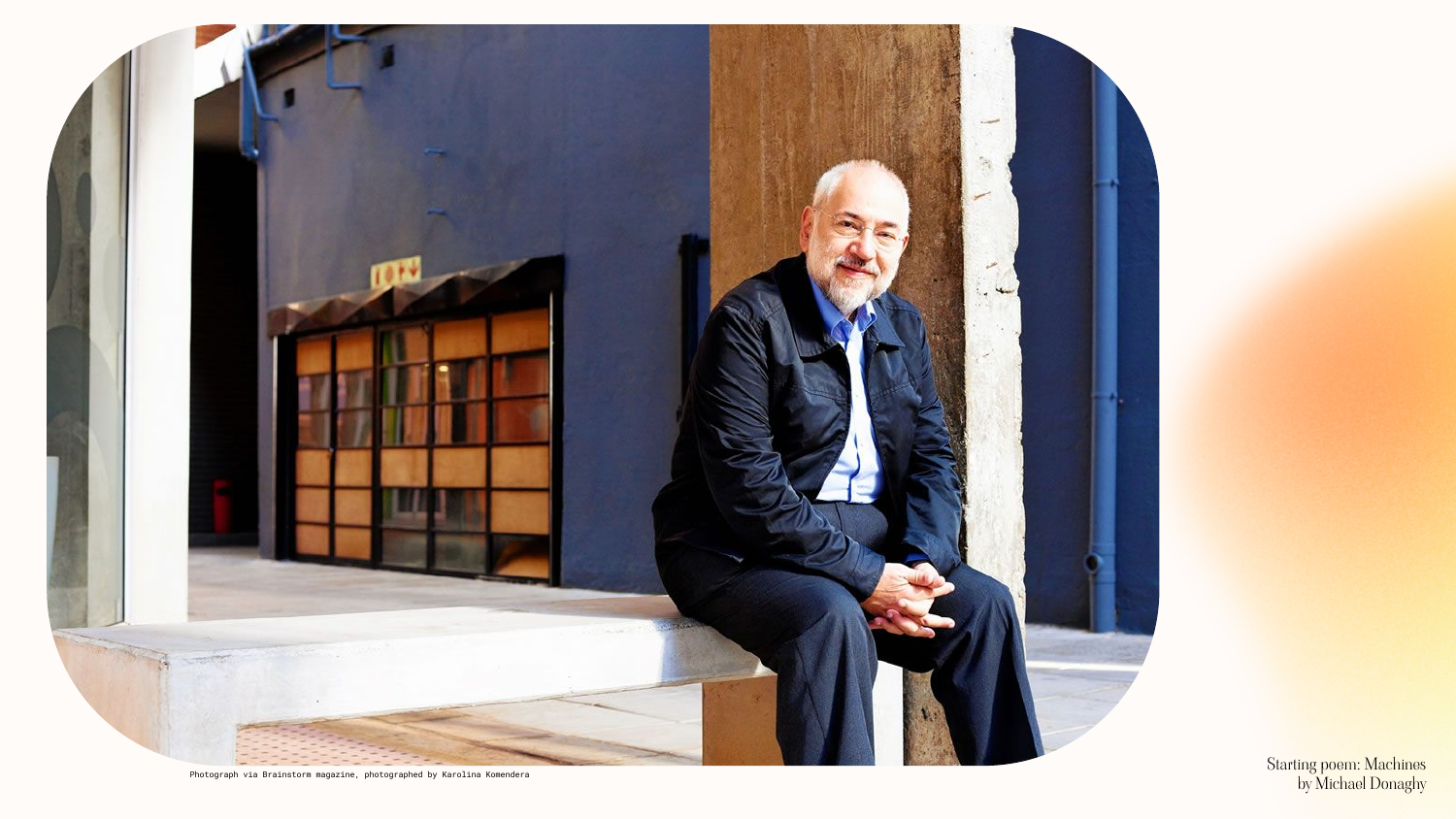
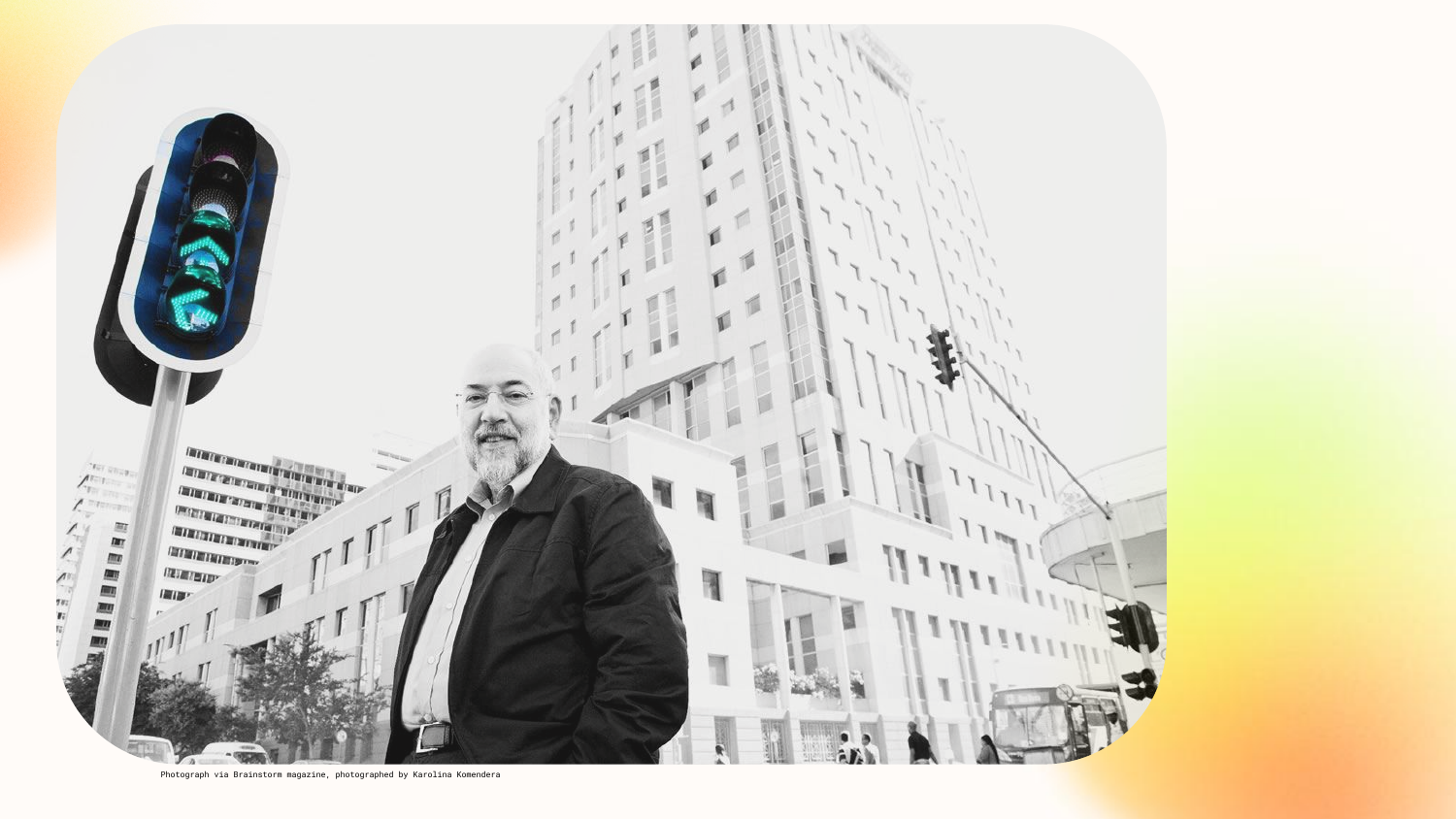
Many of you in this room, especially his family here, knew Barry and his work intimately. My relationship to him is different: I was trained by the people he taught, graduated with the degree he designed, passed him in the office corridor and daily, and experienced his passion and intellect if only but indirectly. Tonight and this talk, is a letter to him.
Dear Barry,
You never taught me. I sat in your buildings and was a few doors down the corridor from your office, but never sat in your class. I work in a field built on the discipline that was your life’s passion. I am a product of your impact and legacy.
You died in May 2023, less than 6 months after a chatbot was released that reached 100 million people in 2 months. You saw ChatGPT emerge, and saw the beginning of a new phase of Artificial Intelligence, but not the rest. So this talk, or touch if you were here, is a report on what happened after you left. What we built with what you gave us. What we haven’t built yet.
Barry, in 2016 upon receiving the Distinguished Service in IT award, you said: "One of the things that I try to teach my students is that the hardest thing to manage is a software project because you will be managing something invisible. This whole industry is invisible yet it is the underpinning factor in the current fourth industrial revolution.”
The most consequential, invisible thing we now have to build is not software, or even AI. The invisible thing that now matters most is trust.
Trust is the willingness to rely on what you cannot check, and work you cannot see. It is an act. Barry, You repeatedly demonstrated this to us, since you spent your life managing invisible things, and every one of them required someone to rely on something they couldn’t inspect: a student on a curriculum, a sponsor in a dark room, a city on a precinct that didn’t exist yet. We know from your life’s work that our aim isn’t simply to have more trust, but high trust: reliance that turns out to be justified.
Trust then is not what we add to a technology once it works. Trust is the technology. And the argument I put forward is that this is the part of AI that Johannesburg can build for the world, not the part we wait to receive from it.
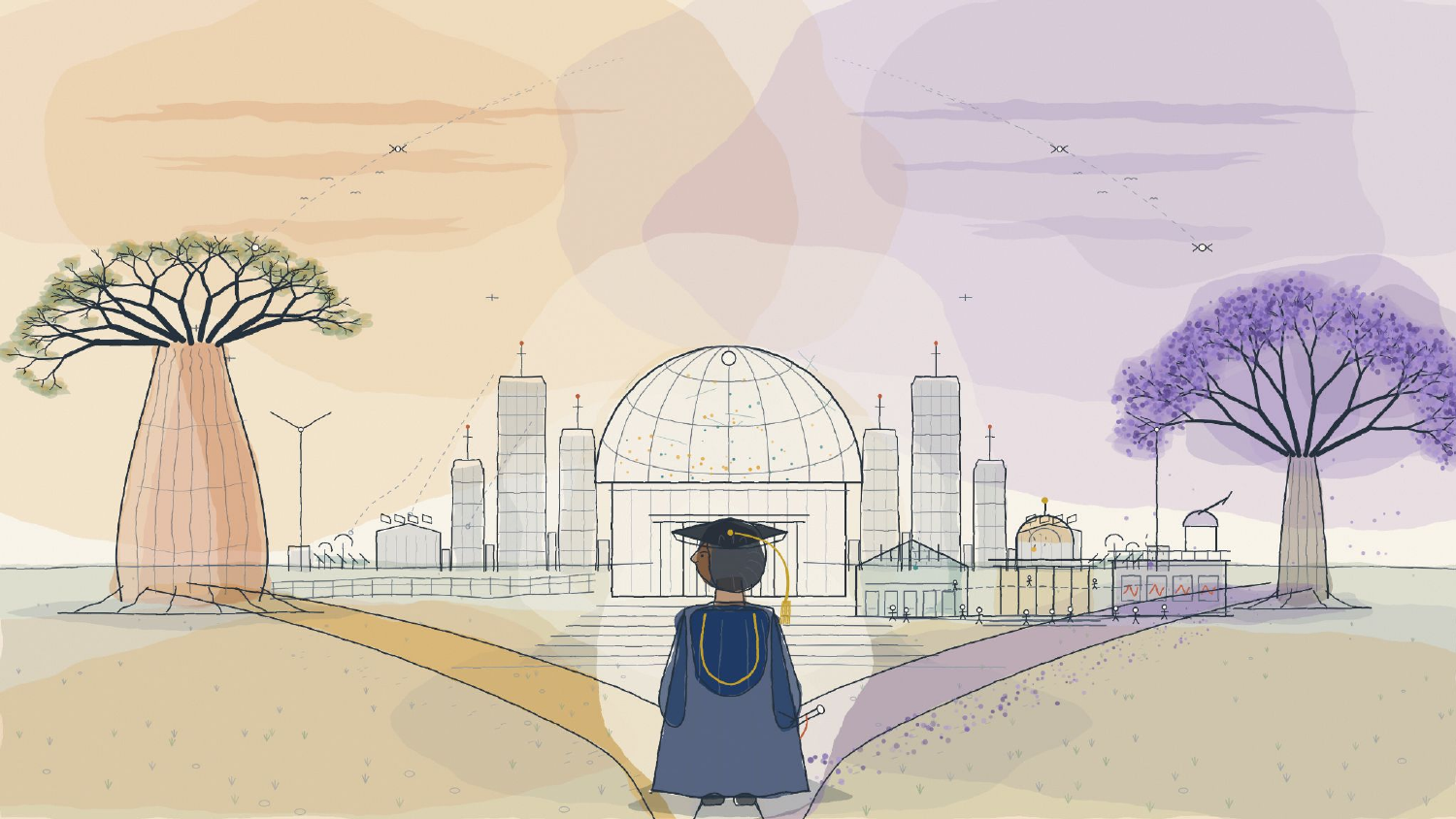
Twenty years from tonight, this hall is still standing. It is 2046, and a graduate walks out of it. She walks out proudly. She could enter into two very different futures.
The Deferred Future
Our graduate holds a degree in engineering. In this future, she, like her cohort generally, is fluent in the latest AI tools and workflows, many of which are freely available. Many models and agents and systems she relies on are built and evaluated by firms operating globally and are considered state of the art. AI is in all parts of her life.
Scene 1: The Classroom
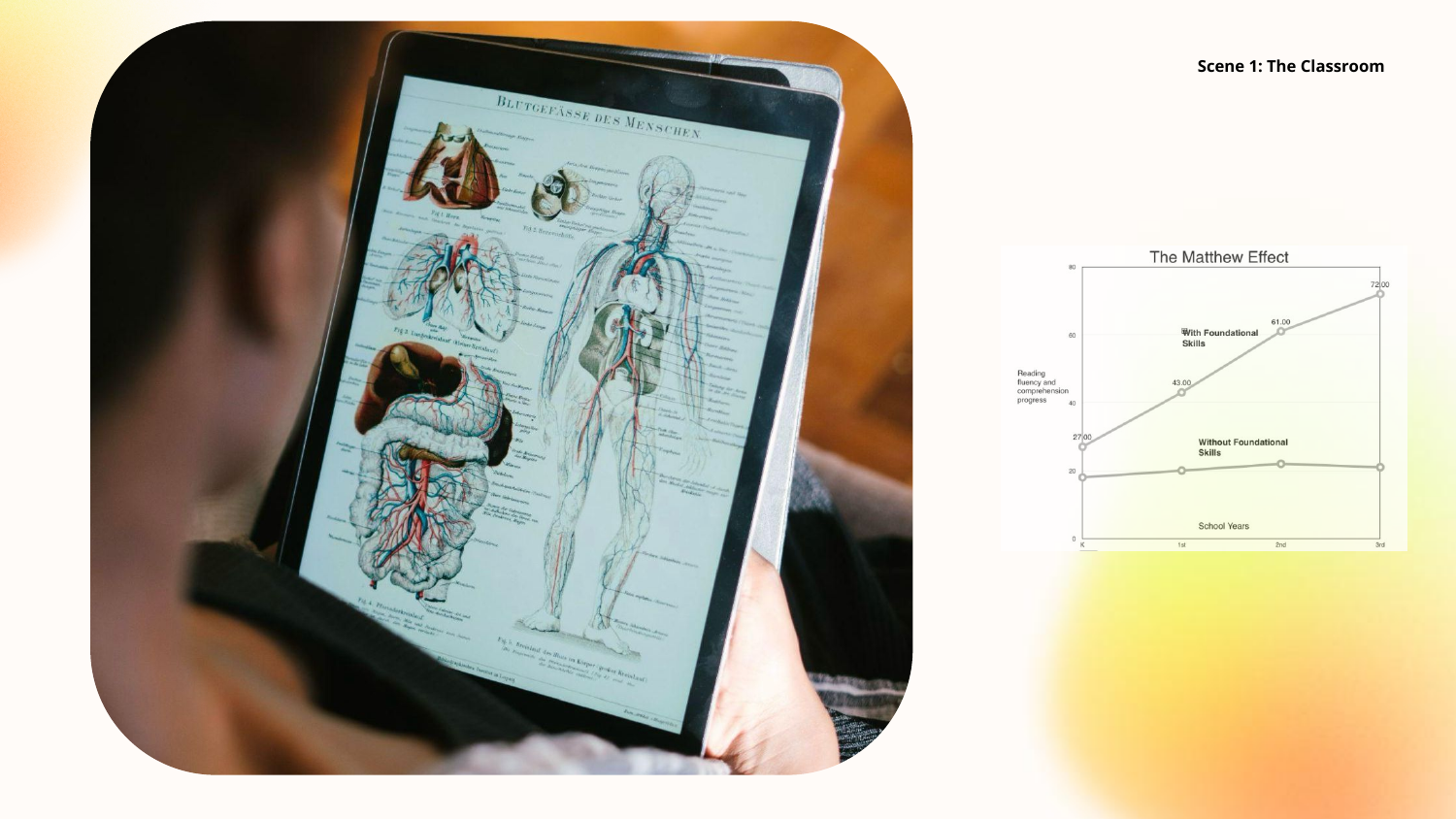
She, like many other learners, has an AI tutor, and every teacher has a teaching assistant. They are good and give new ways of learning. Whenever needed, these tutors can provide introductions, explanations, guides, quizzes, and resources related to a learning goal for any subject area, at school, at work, or at home.
These tutors were built somewhere else, evaluated somewhere else, and by people who never asked what a South African classroom needs. Teachers use it because it arrived and it was free.
But learning technologies can significantly shape the learning outcomes of students. And already the Matthew effect - also known as the rich get richer effect - can be observed, where these tools mostly benefit the most advantaged students, contributing to widening disparity. And overall, nobody in this ecosystem had standing to ask whether it works for these students and to make it work for them.
Scene 2: Weather Forecasts
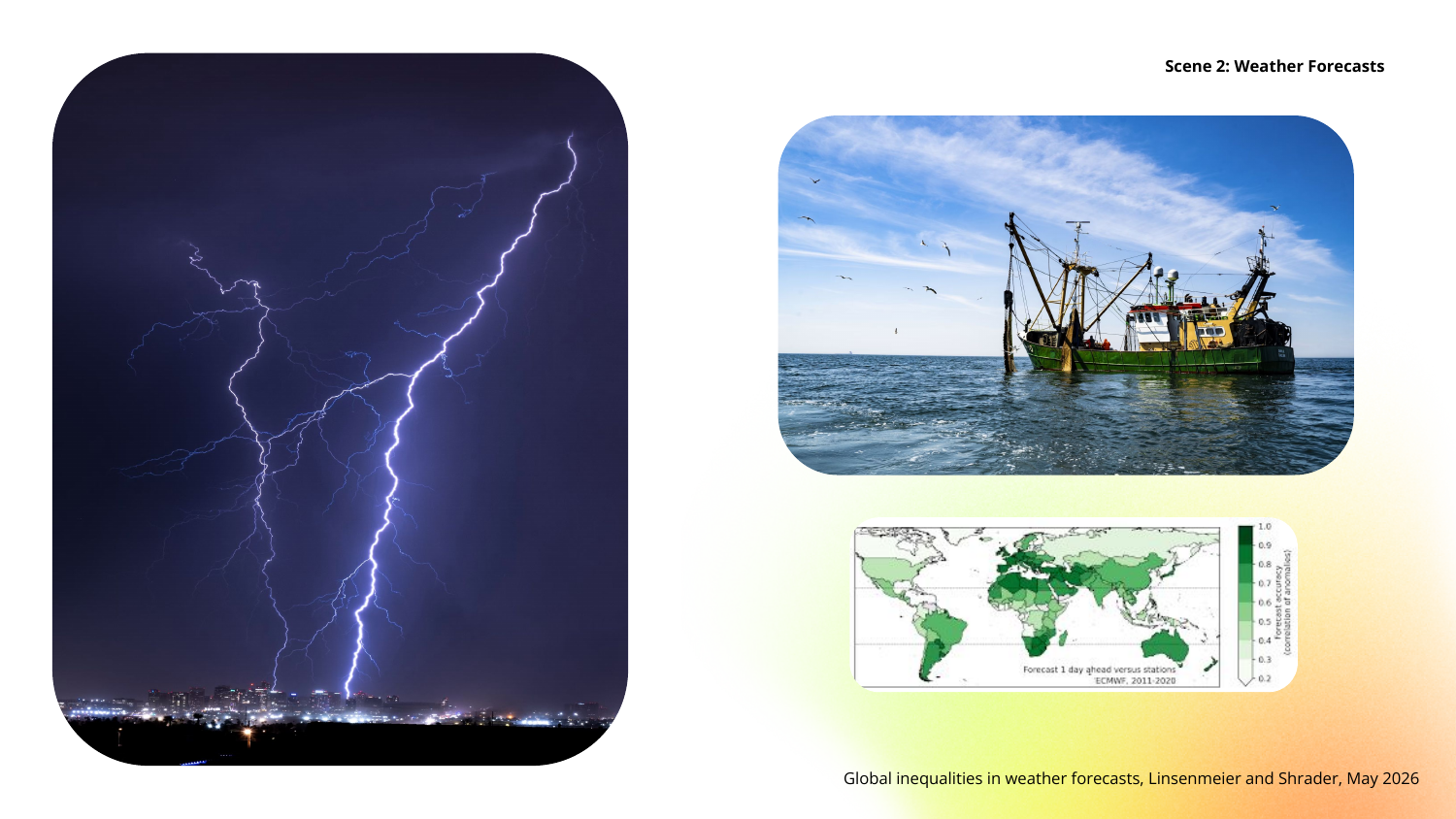
Our climate has continued to change, and the effects on mortality are noticeable. Extreme heat is a major concern. But forecasts of temperature and weather are improving significantly, especially with AI. But that is not a benefit our graduate experiences. For her, a seven-day-ahead forecast in a high-income country is on average more accurate than a one-day-ahead forecast in a low-income country. And low-income forecasts today are about as good as high-income country forecasts were 17 years ago.
By the 1990s, forecasts of El Niño had improved enough that you could see months ahead how the ocean would change, specifically informing shipping conditions, and impacts on fish populations. For the fishing communities of Peru in 1997, this should have been good news. People who live off an unpredictable ocean finally had some warning.
Then somebody read that forecast, and somebody did the calculations: a weak season coming, wages to be paid through it. And then fishing companies decided to accelerate layoffs of their workers.
The science was sound. The prediction was correct. The outcomes, worse. The people it was meant to protect learned what it meant when they lost their jobs.
Nobody asked the question that would have changed the outcome. Better information, but better for whom?
Scene 3: Health
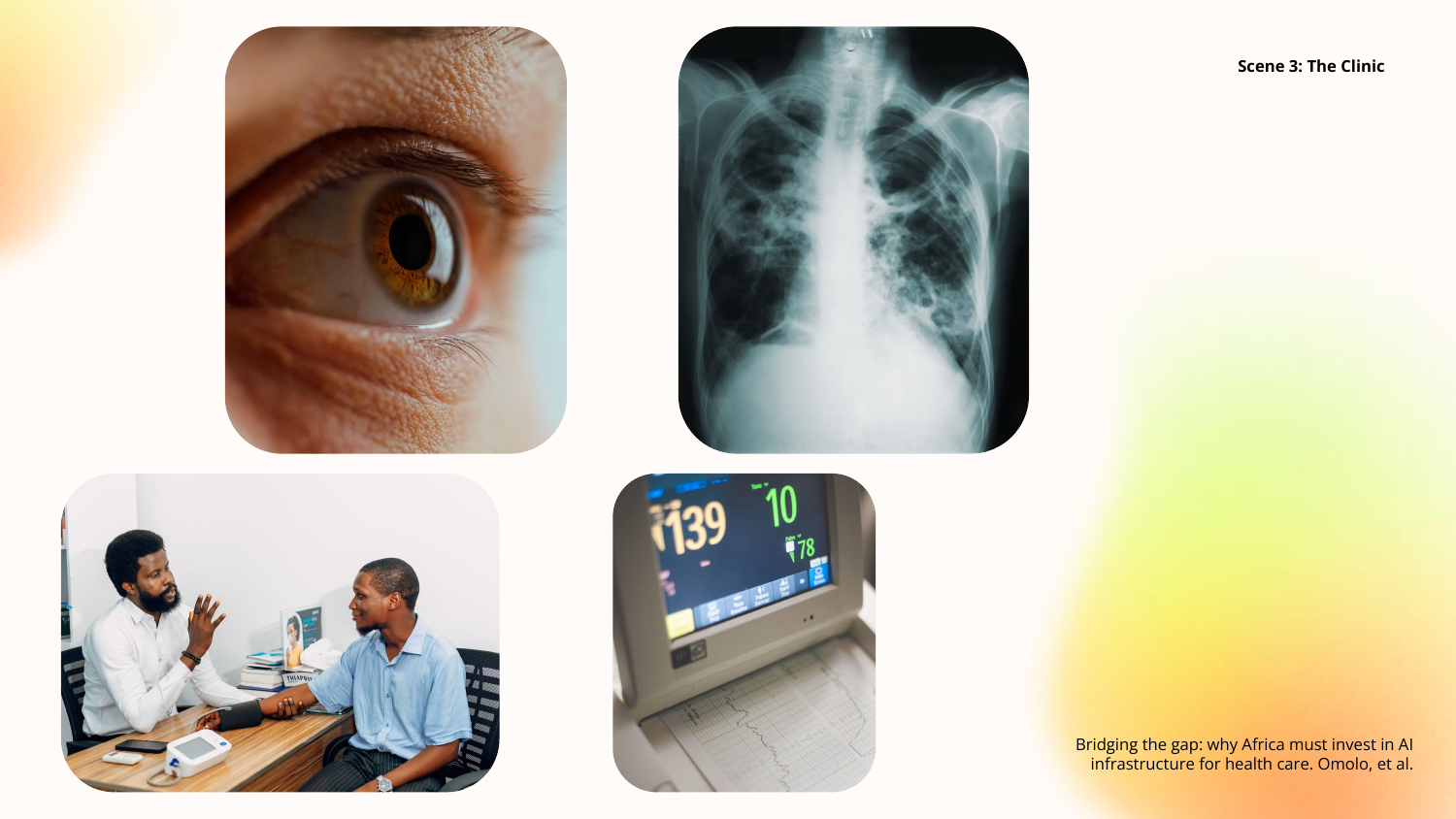
Our graduate’s father is diagnosed by an algorithm. It reads his chest x-ray, flags his retinal scan, helps his doctor take notes. These tools are genuinely good, and many match or can exceed expert performance. But they were trained on other people and under assumptions that describe almost none of the places in which our graduate's father was cared for. Roughly 1% of the world's clinical data comes from African populations.
And nobody can tell her whether any of it worked for him. The evidence on how these systems actually affect health equity in African health systems remains largely conceptual. Earlier this year, researchers went looking for the evidence, looking for every study they could find on what AI is actually doing to health equity for marginalised people across sub-Saharan Africa. They found twenty-three pieces of work. Just four of them had measured anything.
Twenty years of development, and the people these systems were built for were never once in the room where they were built. Our graduate's father was not in the data. He was not in the design. He was the subject of the system, but never a participant in it.
***
Our graduate is capable, trained with a Wits degree, yet she is affected by an invisible phenomenon: the gradual draining of human judgement; and a slide into a future where we stop being people who decide, and become people who defer.
There is nowhere to take a complaint, and nothing to appeal to. Deferring is the only rational thing available to her. The tragedy isn't that she trusts wrongly. It's that trusting is all she can do.
Nothing in this future requires malice or failure or an enemy. Every system worked. It only required that the invisible thing was never built, and that it was never built here.
But what I have just described is largely the world we are already in. The only fiction was the date.
The Built Future
So let me tell you about our graduate’s alternative future. In this future, decades earlier, her communities and groups were not just data points; they were designers, collaborators, and stakeholders. To ensure that our graduate's father is a participant in his own care, and the fishing communities are protected rather than penalized, the architects of this future had to rethink how systems are built from the ground up. The scenes she experiences are different.
Scene 1: The Classroom
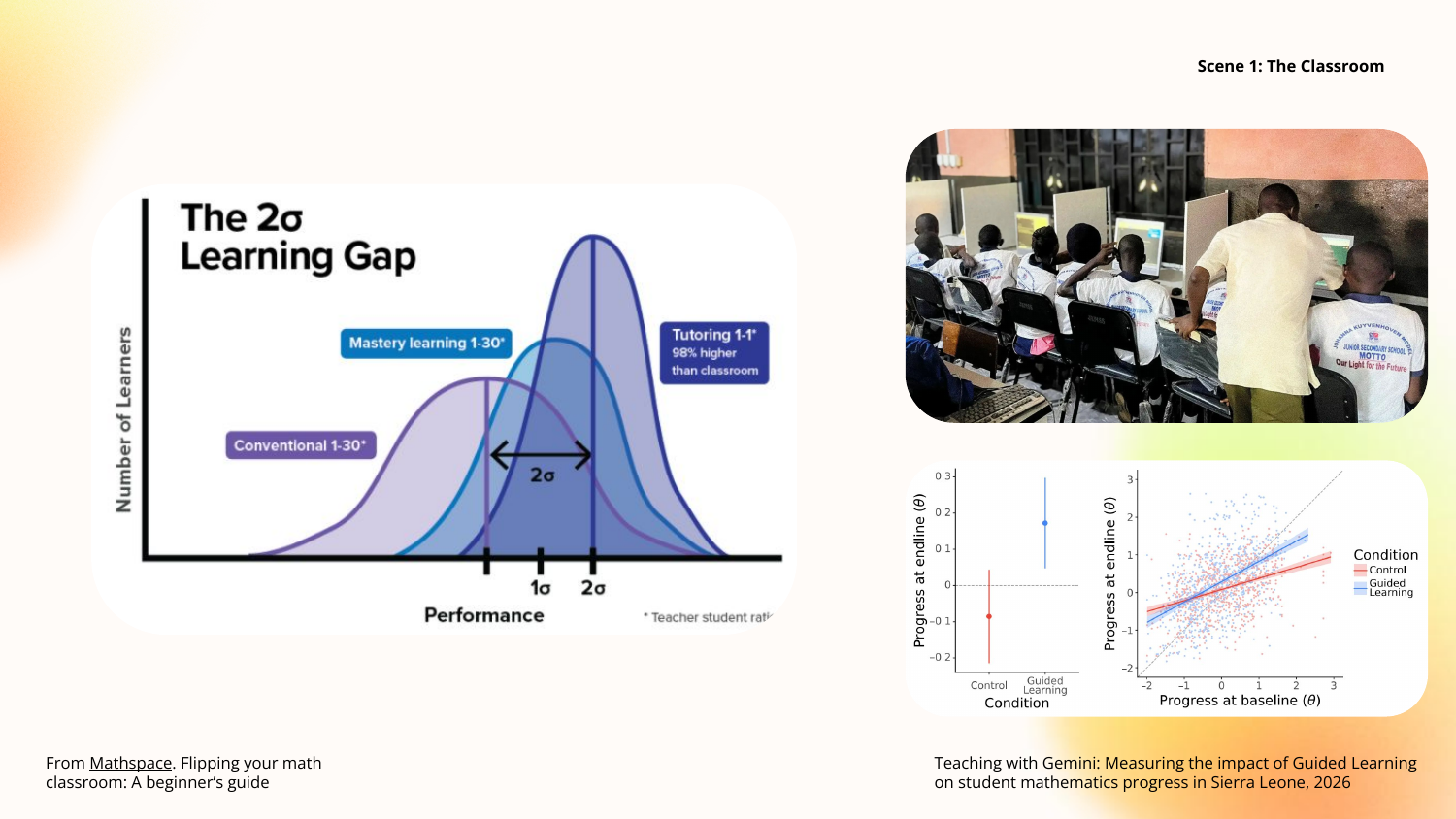
In 1984, the educational psychologist Benjamin Bloom published one of the most influential graphs in the area of learning and education. Bloom reported results that showed that one-on-one tutoring led to a two sigma improvement in student performance. That means that if you take an average student, give them a good tutor working one-to-one, they end up performing like the very best students in the class. But that approach is unaffordable and can’t operate at a global scale. This led to what is known as the 2-sigma problem that asked how we could achieve these results in ways that can actually be delivered in practice.
This emphasises tutoring as an important problem, and AI gives us a new tool for intelligent tutoring. Building the best AI for learning, begins by working with teaching experts to establish a set of pedagogical or learning principles that characterises what a good AI tutor should do: don’t give away the answer, be engaging and motivating, guide the learning journey.
There isn't one way of teaching, and no one at a lab should be deciding what good pedagogy is. So rather than build one definition into the model, we built systems that follow the teacher's instructions. That is a trust design, not a technical one. It keeps control with the people who actually know the classroom.
In a randomised control trial of students in UK schools, when tutored in this way, students were 5.5 percentage points more likely to figure out problems on their own the next time, compared to learning with human tutors alone. In a randomised control trial in Sierra Leone, students' improvements represented roughly 1.2 to 1.7 years of typical learning progress achieved within an eight-week trial.
Equitable digital learning requires reducing the barriers to access while providing the highest quality. And in this future, that was treated as a design requirement rather than an afterthought. That’s how we got trust, not deferral. The measure of a good AI tutor is not that the student trusts it more: it's that the student needs it less. That is how you build trust in one classroom, one student at a time. Now something much larger.
Scene 2: The forecast
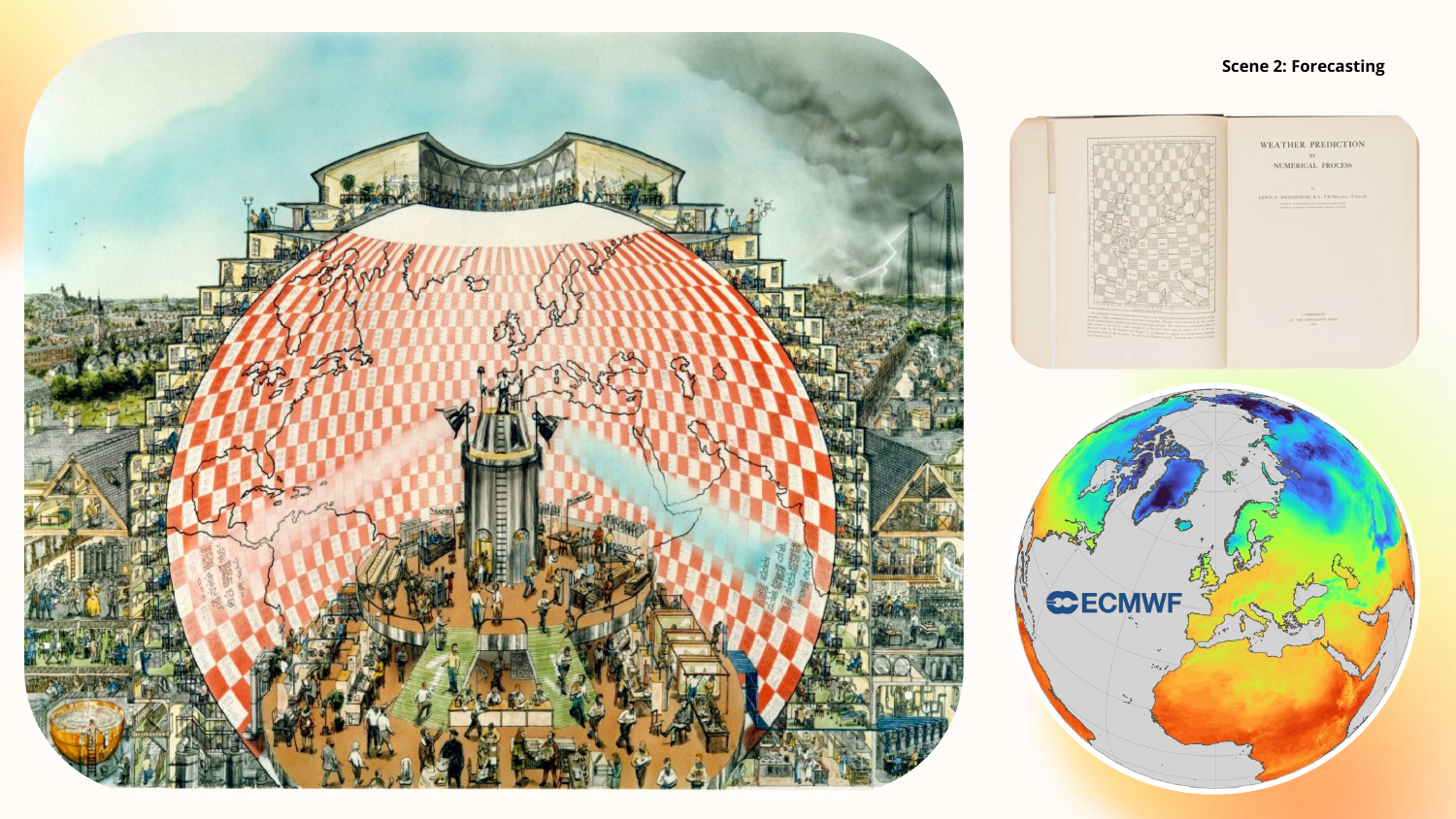
In 1922, Lewis Fry Richardson put forward a vision for a forecast factory that would be the new way to make weather forecasts. This factory is a building with an enormous central chamber with walls painted to form a map of the globe. A large number of computers, human computers, are busy calculating the future weather. Richardson estimated that 64,000 people would be needed to complete the calculations needed to forecast the changing weather. It turned out different in practice, but today Richardson’s broad-strokes vision has been realised. One person's vision, realised decades later by people he never met.
One magic ingredient here is the commitment of international meteorological organisations and their member states to making numerical simulations available for us to use as training data. And because of this, today’s AI weather models outperform operational weather models, are orders of magnitude faster to produce, and help in life-saving weather events like cyclones.
And this breakthrough was possible because of an act of institutional generosity and foresight — meteorologists sharing data decades before anyone knew what it would be used for. That is what trust infrastructure looks like. Which raises the harder question: how do you act early, when you cannot yet see what you are building?
Scene 3: Participation
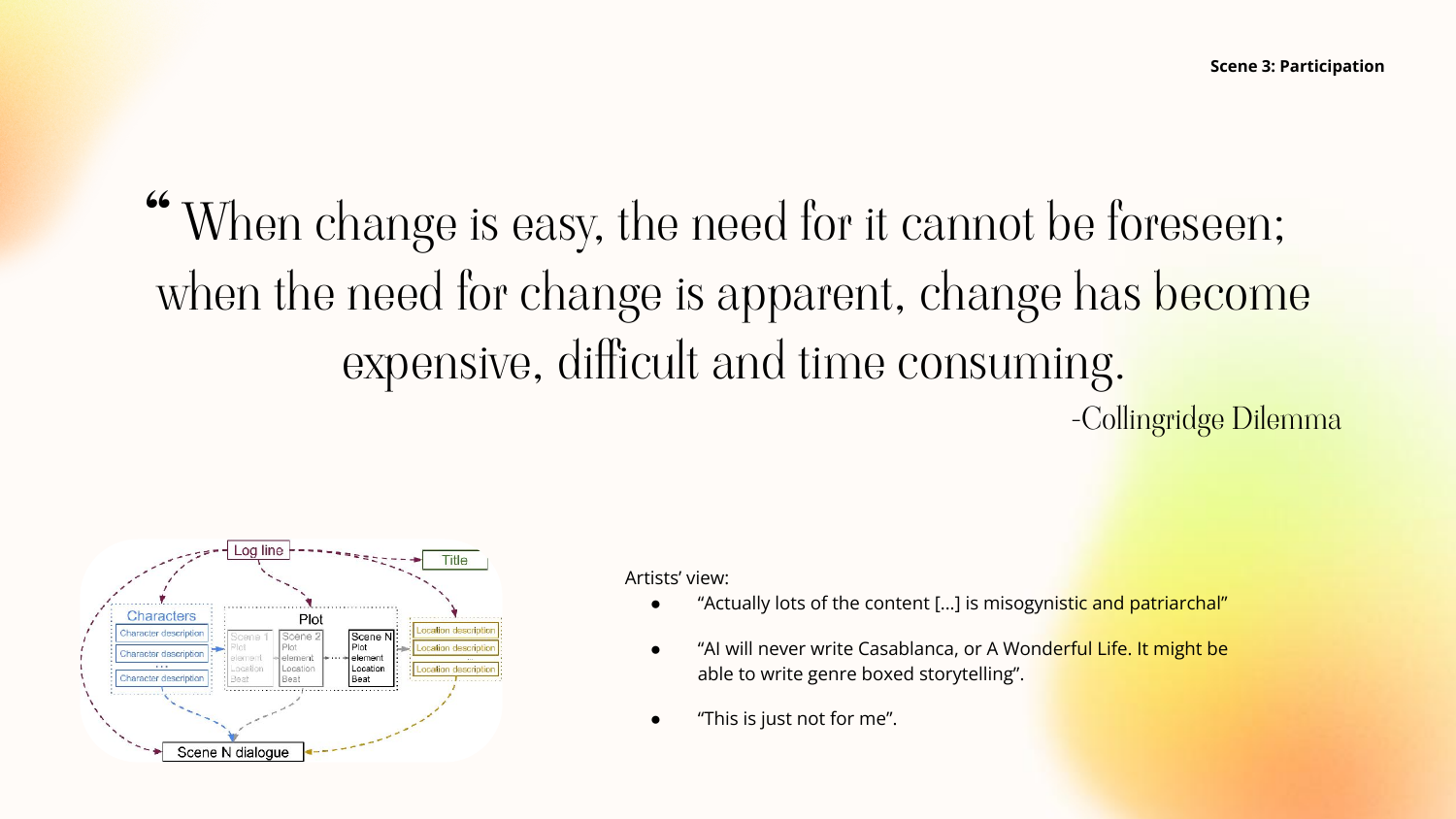
There is a well-known tension here, captured by the Collingridge dilemma: "When change is easy, the need for it cannot be foreseen; when the need for change is apparent, change has become expensive, difficult and time consuming." Participation is how you break free. You bring people into the design early, you make disagreement possible, and you stay willing to make changes.
Dramatron is a tool that uses generative AI to help create coherent scripts and screenplays. Artists who evaluated this tool had a lot to say, not always good:
“Actually lots of the content [...] is misogynistic and patriarchal”
“AI will never write Casablanca, or A Wonderful Life. It might be able to write genre boxed storytelling”.
“This is just not for me”.
A design process that can survive being told it's wrong is what makes a system trustworthy. Disagreement and rejection must be possible. Rejection that changes nothing is consultation. Rejection that changes the work is participation.
In this future, those who benefit are built into how a technology is made and have power to redirect and stop the work. That is what I and many others have been working towards: that Africa's communities be owners and shapers of the role of AI and technology in their social worlds.
Scene 4: African AI
I know what that sounds like from a stage. So let me tell you how small it was when we started.
I had for many years attended our leading conferences in AI, and always asked: “where are the other South Africans?”. Once you ask that question, you start asking about our neighbours, and then quickly recognise that our entire continent is missing.
We followed up with a small study, which we eventually called the missing continents, which pointed out that in the previous 10 years from 2006-2016, at the world’s leading conference zero papers were published from African universities.
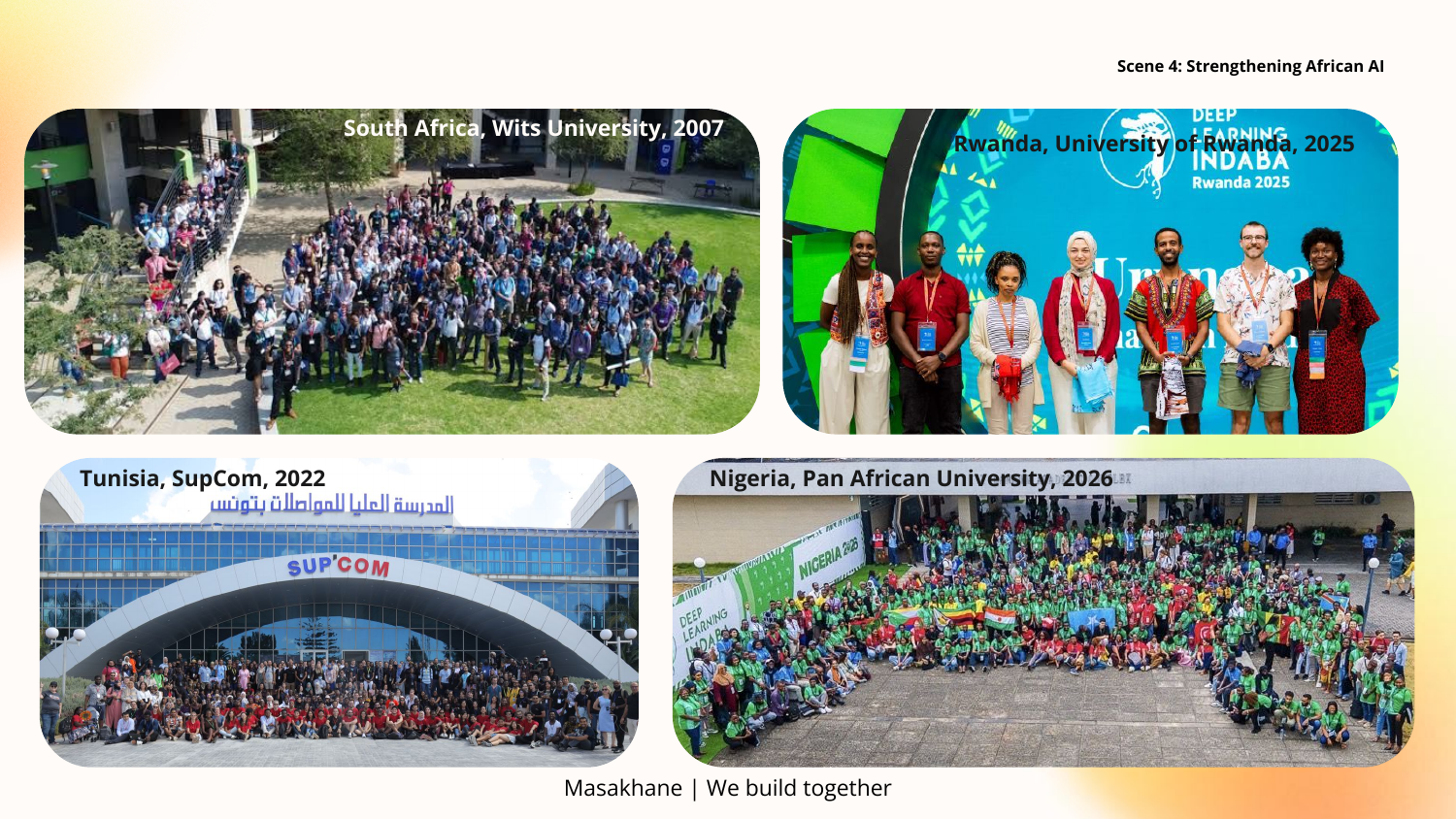
That became an opportunity to do something real. We started by counting papers, then we created an organisation called the Deep Learning Indaba with a mission to Strengthen African AI. In 2017, we hosted, at this university, our continent’s largest AI event that at the outset had representation from 23 of our continent’s countries. We then moved to building local expertise and communities at the continental scale, and today have local AI communities and leaders in 49 countries across our continent. And that work has gone further, sparking the creation of similar regional communities across the world, in eastern Europe, in South America, in South East Asia, the Caribbean, and the Middle East. One word captures our driving philosophy: Masakhane, we build together.
Compute is concentrated and rival: what one of us has, another does not. Trust is not like that. Trust is the technology we can build in Johannesburg and give to the world, and have more of it for the giving.
***
Everything in this future already exists, in pieces. Teacher-driven learning environments, global data commons, the artists who say no, the communities in 49 countries.
When our graduate walks out of this hall in 2046, the machines she uses are not much better than the ones in the alternative future we first imagined. What is different is that the research and products were developed here. Somebody here tested them. Her community was asked. And when something didn't work for us, there was a body with the standing to say so, and the work changed. In this other future, our graduate benefitted from a strong and thriving ecosystem that was built decades before.
She trusts these systems, and her trust is warranted, and if it stops being warranted there is somewhere to take that. She decides. The cyclist, not the cycle, steers.
Which of these two Johannesburgs we end up in is not decided by the capability of our AI models. The bottleneck of this coming decade will not be capability. It will be credibility.
Capability sets what is possible; credibility sets what is adopted, permitted, and relied on. Right now the second is the key constraint. So where does credibility come from?
It is built by people who decide to build it.
Our Choices
I want to take you to two rooms in this city. Both of them are about trust. Neither of them is about artificial intelligence. Barry was in both.
Room 1: In Lenz
In January 1970, Barry reported for compulsory national service. He was seventeen.
He describes the morning in his book. In a Bedford truck, the flap raised, setting off into Johannesburg's early morning traffic. Every order shouted in a language he could not understand. And when they arrived, he recalls:
"I tried to get myself into a position near the back where no one would see me. I still clutched my dad's brown case in one hand, and my call-up papers in the other."
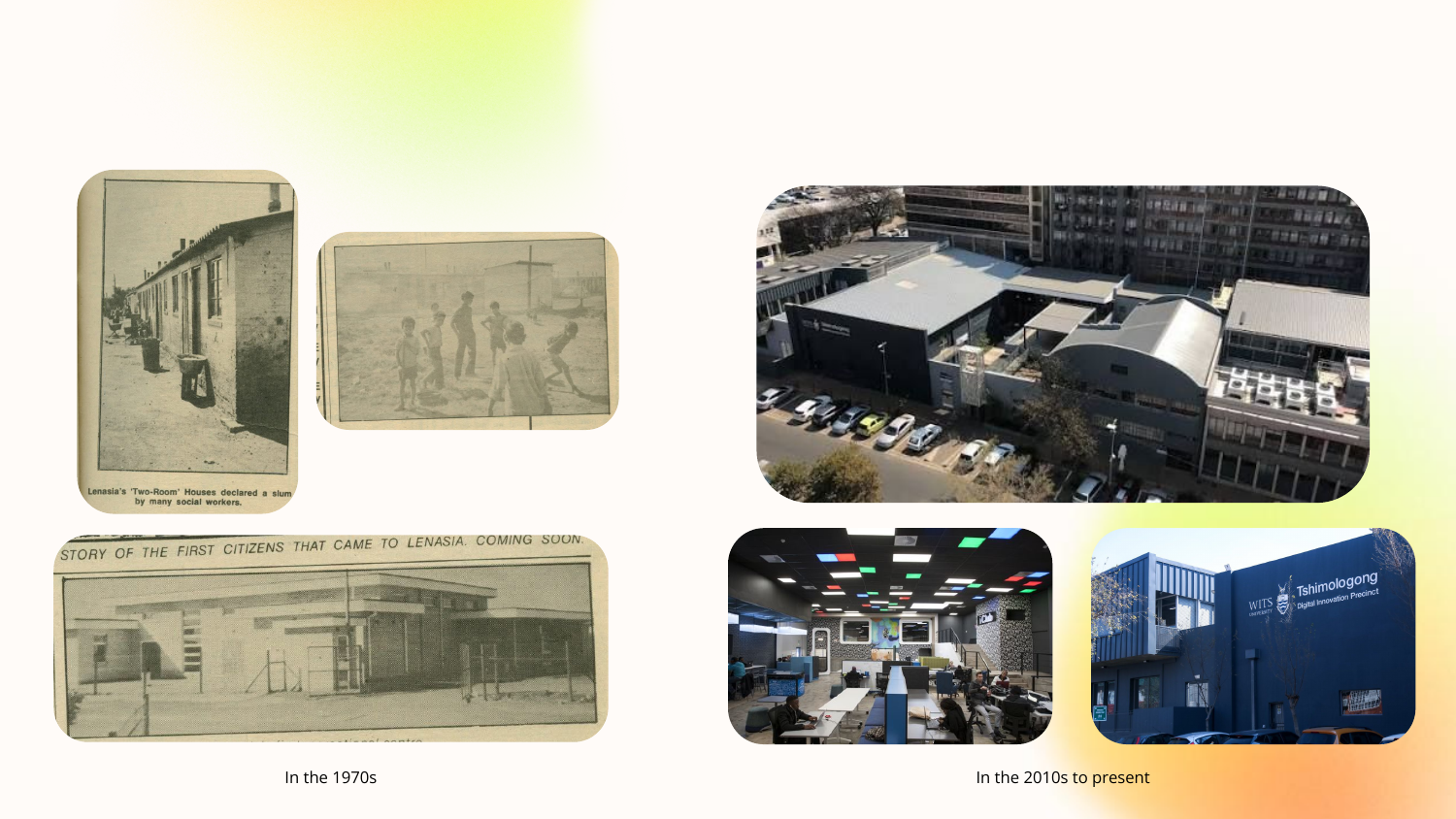
He also tells us exactly where he was. "The Lenz military base is about forty kilometres south-west of central Johannesburg. It's on the outskirts of the then-Indian township of Lenasia." I was born in Lenasia, almost exactly fourteen years later.
Neither of us was there by choice. That choice was made by a state that set out to make trust between people impossible. Not by accident. By design, by law, by geography: a whole architecture built so that the boy on the parade ground and the family a few kilometres away would never have reason to rely on one another.
Trust can be destroyed deliberately by law, just as it can be bypassed quietly today by technology that demands our deference but never our design. In either case, it has to be rebuilt by hand. Barry spent the rest of his life doing that.
Room 2: Juta Street
Barry had made a vow, some years earlier, that he would never go back to Braamfontein. It was dirty, it was rundown, it was, in his words, quite a scary place.
Fourteen years later, he broke that vow. He found a building on Juta Street. A semi-derelict old nightclub. No electricity. No windows. And then, two or three times a day, for months, he brought potential sponsors there. Torch in hand — because there was no light — he would walk them through the dark.
"'And here we will have a large co-working space. And there we will have a coffee shop,' I would say, pointing to debris-covered floors and broken toilet stalls, as the sound of rats scurrying in the dark made my visitors look anxiously around them."
And his own assessment of how this was received: "Most visitors thought I was a complete loon." Some of them didn't. Some of them could see it. And the money came in, and the plans were drawn, and a builder was appointed.
Then he needed a name. He didn't choose one himself. He asked someone on his team, Xoliswa Mahlangu. She went away, and came back a day or two later with a seTswana word: Tshimologong. A place of new beginnings. The founder did not name the thing he founded.
Barry acted long before there was any evidence he was right. And he stayed correctable: he brought other people in, and let them shape it. That is the whole method. That is how you build something invisible. Credibility was not given to him. He built it in a derelict building with a torch, and he built it in a country that had spent decades making it impossible.
Lessons
Barry, I have learned a few things trying to do the same.
The first thing is that the beginning is always absurdly small. Mine was counting papers that weren't there. Yours was standing in a derelict nightclub with a torch, describing a coffee shop to people who could hear rats moving in the dark. Neither of us had any evidence we were right. We started anyway. Nobody ever tells you that's allowed.
The second is that you don't get to keep the thing you make. You asked for a name you would never have thought of, and it is the name that has carried ever since. We built something in this university in 2017, and it has since been replicated by people I have never met, in places I have never been. If it can't leave your hands, you built something else.
And the third, is that the hardest part was never the technology. We can train the models. We can run the trials. We built communities in 49 of Africa's countries. What we have not built is the machinery that holds any of it. Institutions that check the work. Institutions that make the work. Institutions with the power to decide who the work is for.
The African Union called for a Charter on Trustworthy AI. It has not been written. Its strategy asks for independent oversight institutions. South Africa still has no national AI policy.
You would have started on this the week you heard about it. You would have found a building nobody wanted, and a torch, and you would have walked people through the dark until enough of them could see it.
But you can't. And I'm not really writing to you.
Proposals
So I am writing to you instead, and that work falls to us in this room. We already know what it looks like, because we have seen all three parts of it tonight.
We can build AI that makes people more capable of judging, not less. That was the tutor whose measure of success is that the student needs it less. It is the difference between our graduate who decides and our graduate who defers.
We can build the institutions that make a claim believable. Not because it is loud, or because the model is massive, because it was built and tested by people the world is willing to stand behind. That was forty years of weather data, given away by countries who had no idea what it would one day make possible.
And we can build things that get stronger the more they are shared. That was the Indaba: begun here, given away, and stronger for it. Trust is not like compute. It does not run out when you share it.
That is the direction. Now let me tell you the first thing I think we should build.
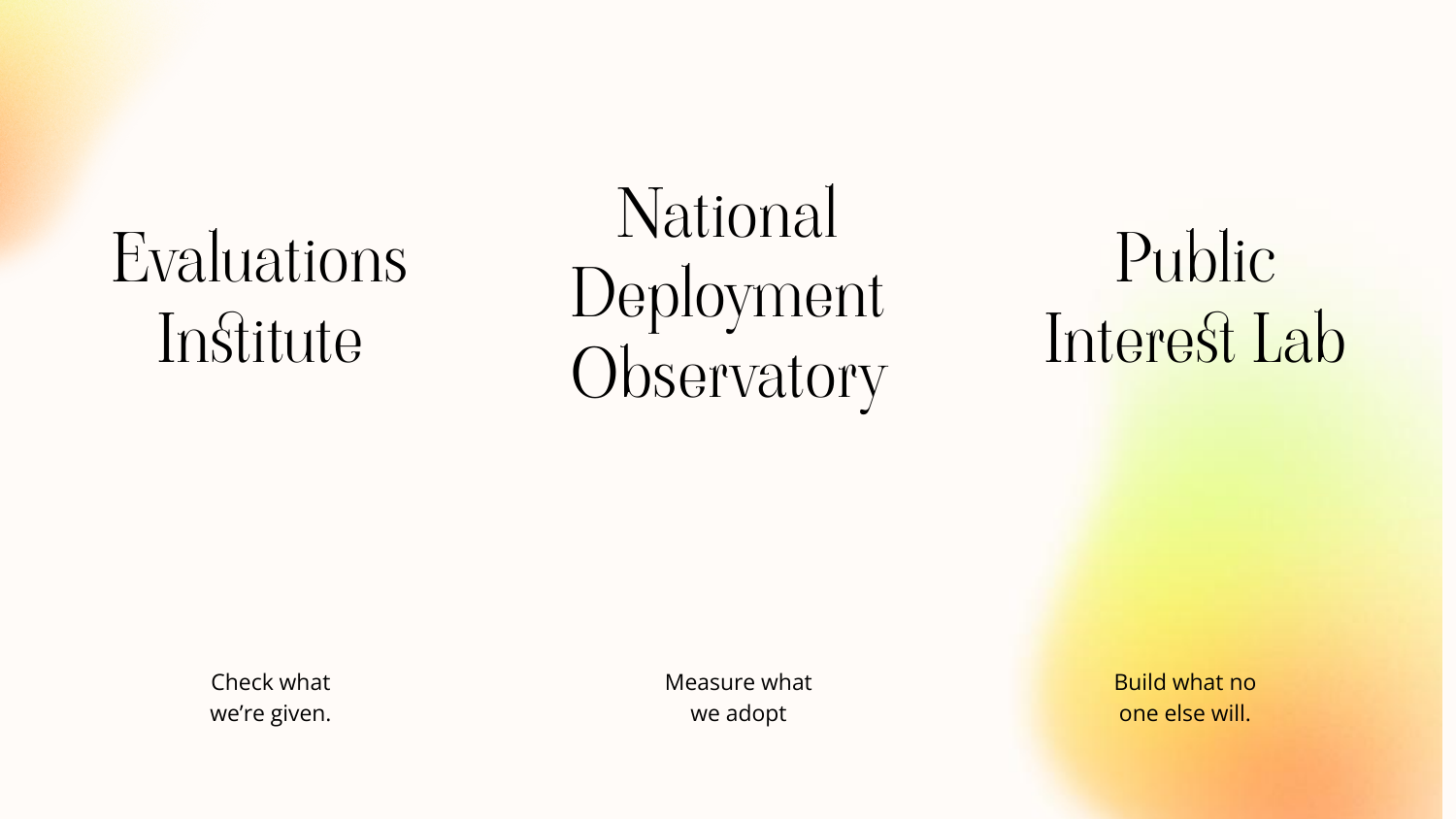
There is not one independent institution on this continent with the standing to evaluate the AI systems being deployed into our schools, our clinics, our courts, our weather services: to test them, to audit them, and to say publicly whether they work here. The African Union asked for it. It doesn't exist.
I should say plainly that I work for one of the companies building these systems. That is exactly why I think this has to exist outside of them, and here. This university sits where the city meets the campus, where research meets industry, where things get built. There is no better place on this continent for it.
Other countries have built institutes to evaluate frontier models. This is about what is deployed here, and whether it works. And I think it should do three things.
First, an evaluation institute.a place where systems get tested in localised conditions, publishes what it finds, and that anyone can point to.
Second, a national deployment observatory. When an AI system is deployed into a South African school or clinic at scale, an evaluation goes with it. Not a gate, not a permit — evidence, produced as a matter of course, so that in twenty years somebody can answer the question nobody can answer today.
Third, a public-interest lab. Because you cannot evaluate what you cannot make. Working on the problems the market will not serve: our languages, our classrooms, our clinics, our conditions.
Check what we're given. Measure what we adopt. Build what nobody will build for us.
I'm not going to ask this room for anything I'm not doing myself. So here is what I am committing to tonight.
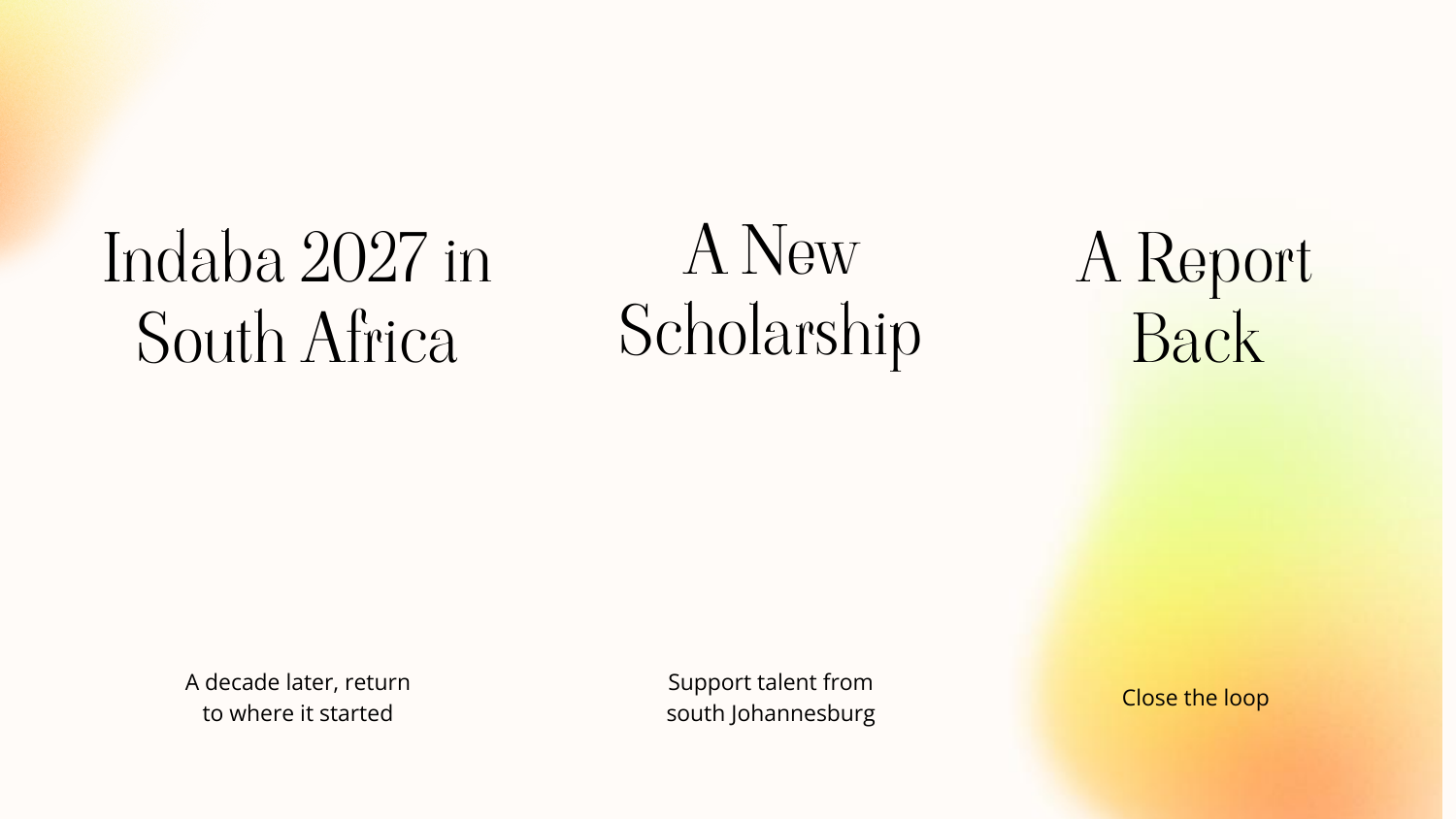
Firstly, in 2027, the Deep Learning Indaba comes back to South Africa. It began on this campus in 2017. Ten years later it returns, and is asking what the next decade of African AI needs. And it will be asking the question across Africa’s AI communities: what would it take to build the institutions this continent does not have.
Secondly, I am establishing a scholarship for students from Lenasia, Eldorado Park and Soweto to study at this university.
And thirdly, everything I have just described could quietly not happen. In three years, I will report back. And in person if the university will have me: On the scholarship and its progress. On what came out of the Indaba's question. And on the institutions and what stage they have reached. Including the parts that failed.
Choosing to Act
I also want to ask something of you. If you want to honour Barry, don't admire what he built. Do what he did. Act before you have all the evidence, stay correctable, bring people in and let them change it.
So, choose something. Build an evaluation for a system nobody has tested here. Start the community that doesn't exist in your discipline. Take the local question seriously, the one everyone tells you is too small to matter. That is the size of a beginning.
None of this will be easy, and none of it will be finished quickly. But we shouldn’t wait for perfect conditions.
The poet Ben Okri writes of the ones who wake to a moment like this. And he calls them the chosen ones who have chosen to act. Not the ones who were ready. The ones who decided. From Ben Okri: